
Looking clean and being hygienic aren’t always the same thing
Table of Contents
The key takeaways
- Cleaning and sanitising serve different purposes, and one cannot compensate for the other.
- What matters most is the order they’re used in, because sanitising can only do its job properly when cleaning has already removed what’s sitting on the surface.
- A surface can look spotless and still carry hygiene risks, which is why problems often linger even when cleaning feels consistent.
- Hospitality, healthcare and education settings usually need a more focused approach to sanitising, simply because of the level of shared contact and higher risk areas involved.
- When hygiene problems keep resurfacing, it’s usually a sign that routines, products or the order need adjustment, rather than a lack of effort from staff.
What is cleaning?
Cleaning refers to the physical removal of dirt, dust, spills and residue from surfaces using hot water, detergent and mechanical action. It is generally the first step in any hygiene routine, as it addresses what builds up from daily use, foot traffic and shared contact.
While effective cleaning reduces the number of germs present by removing what they live on, it doesn’t necessarily kill them. A surface can appear shiny and clean and still carry bacteria and viruses, which is why this task alone is rarely the end of the hygiene process. Cleaning methods like dusting, vacuuming, mopping and wiping benches or workstations help clear surfaces of build-up and prepare them for sanitisation.
What is sanitising?
Sanitising is about removing harmful microorganisms on a surface to levels considered safe, usually through the use of chemical sanitisers or heat. Unlike cleaning, which focuses on removing what you can see, sanitising targets what you cannot. The goal is not necessarily sterility, but risk reduction, lowering the chance that bacteria and viruses can transfer from surfaces to people and cause illness.
Among the most common active ingredients in surface disinfectants are quaternary ammonium compounds (QACs), which target the structure of bacteria and some viruses rather than the dirt they sit in. These compounds disrupt cell membranes, stopping microorganisms from functioning and preventing them from multiplying on the surface.
That’s why sanitisers are effective when they’re used correctly, and frustratingly ineffective when they’re not. QACs need direct contact with the surface to do their job. If food residue, grease or detergent film is still present, those compounds are diluted or blocked before they ever reach the microorganisms they’re meant to control.
Cleaning vs sanitising: Key differences
While both cleaning and sanitising are often grouped together, they play very different roles in keeping a space safe and hygienic.
Purpose
Cleaning
Removes visible dirt, dust, spills and residue from surfaces so they are physically clear and usable.
Sanitising
Reduces harmful microorganisms left behind after cleaning to levels considered safe.
Process
Cleaning
Relies on physical action such as wiping, scrubbing, vacuuming or mopping, usually with detergent and hot water.
Sanitising
Uses chemical sanitisers or heat to act directly on exposed surfaces once they are clean.
Order
Cleaning
Always comes first. Without it, hygiene efforts are incomplete.
Sanitising
Follows cleaning to manage what remains on the surface.
Effects on microbes
Cleaning
Lowers the number of microbes by removing the dirt and residue they cling to.
Sanitising
Kills or suppresses remaining microorganisms to reduce the risk of transfer and illness.
The difference between the two, and why it matters
Most hygiene problems don’t come from people not trying hard enough. They usually come from shortcuts that seem sensible in the moment. Over the years, we’ve seen many workplaces sanitise regularly and still deal with lingering odours, recurring complaints or hygiene issues that never quite resolve. In almost every case, the same pattern shows up: surfaces are being sanitised before they’ve been properly cleaned.
That’s not to say sanitising isn’t worthwhile. It absolutely is, and in many environments, such as medical centres and food premises, it’s a necessity. The issue is when sanitising is expected to compensate for cleaning that hasn’t fully happened. Dirt, grease and residue don’t just make a surface look unpleasant; they interfere with how cleaning agents and sanitisers work. When that layer is still there, the product is doing its job at a distance rather than where it’s meant to.
Applying sanitising and cleaning methods in the workplace
Offices & corporate workplaces
In office environments, cleaning is usually enough for the wider space. Desks, floors, kitchens and shared areas collect dust, spills and residue simply through use, and regular cleaning keeps those spaces workable and presentable rather than slowly deteriorating.
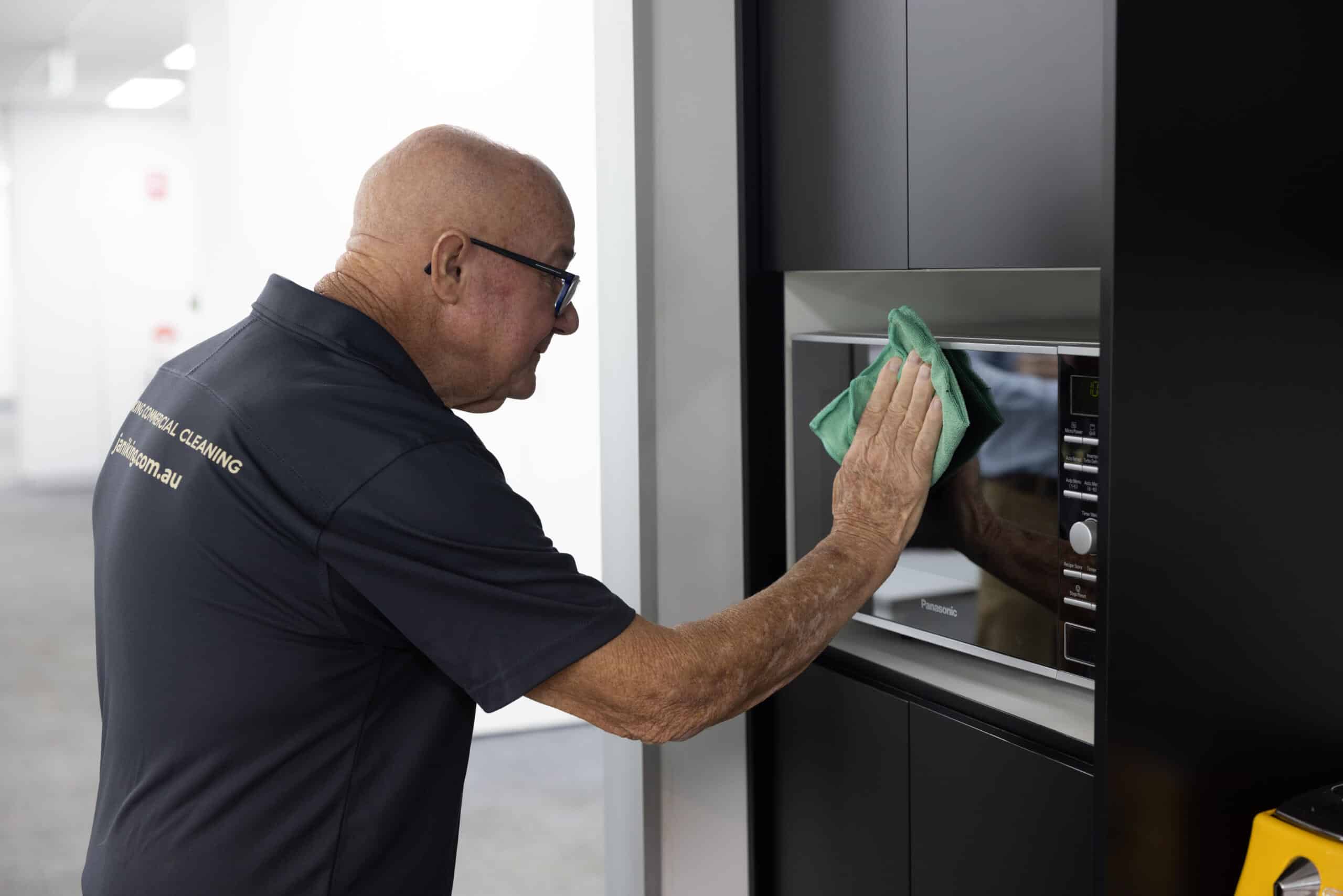
Sanitising is best used selectively. High-touch points such as door handles, lift buttons, shared keyboards and kitchen appliances carry far more transfer risk than open floor space. Focusing sanitising efforts here avoids unnecessary overuse while still addressing where issues tend to start. Offices that try to sanitise everything often spread effort too thin, while those that only clean tend to underestimate how much shared contact actually happens.
Food businesses
Food contact surfaces must be properly cleaned before they’re sanitised. Food scraps, grease and residue left behind act as a barrier, limiting how well sanitising products can work, even when the right chemicals are being used. This is particularly common in food storage areas, benches and prep zones that are cleaned quickly but not thoroughly.
This practice is reinforced in Safe Food Australia: A guide to the food safety standards, which supports Standard 3.2.2 – Food Safety Practices and General Requirements. The guidance is clear that cleaning must come first, as sanitisers are far less effective in the presence of food residue, grease or detergent left on surfaces.
Commercial dishwashers are another area where hygiene regularly falls short. While they’re relied on heavily, they also collect food waste and grease over time, particularly in filters, spray arms and internal surfaces. If dishwashers aren’t cleaned and serviced regularly, they can end up spreading residue rather than removing it. Keeping them maintained supports the wider cleaning and sanitising process rather than undermining it.
Hospitality & childcare environments
Hospitality and childcare settings deal with constant movement, repeated contact and shared surfaces throughout the day. Cleaning keeps spaces usable and comfortable, but sanitising plays a larger role in managing what transfers between people.
Bathrooms, dining areas, play spaces and food storage areas benefit from planned sanitising routines that sit alongside regular cleaning. In childcare settings, especially where contact is frequent and unpredictable, sanitising supports risk control without replacing the need for consistent cleaning of visible build-up.
Tips for effective cleaning and sanitising
Here are a few practical tips that help cleaning and sanitising work the way they’re meant to. They’re small details that often get overlooked but make a noticeable difference over time. Always remove visible dirt, food scraps and residue before sanitising, even if a surface already looks clean.
- Use cleaning chemicals that are appropriate for each surface type, rather than relying on one product for every area.
- Refer to the manufacturer’s instructions for all cleaning agents to avoid overuse, underuse or damage to surfaces.
- Adjust frequency based on risk and usage. Regular cleaning should happen daily, while sanitising is most important during peak illness seasons or in high-risk, high-contact areas.
How Jani-King approaches cleaning and sanitising
One thing years in this industry teach you is that most hygiene issues are slow, gradual build-ups of small mistakes. Standards slip a little, routines drift and before long, cleaning takes more effort for the same result.
That’s why we don’t treat cleaning and sanitising as add-ons or upsells at Jani-King. They’re planned deliberately, based on how a site actually operates, where people move and what gets touched the most on a day-to-day basis. Our teams are trained to recognise when cleaning is sufficient and when sanitising genuinely adds value, rather than being applied everywhere out of habit.
For many organisations, hiring professional cleaning services isn’t about doing more; it’s about doing things the right way. Products are used properly, routines stay consistent and internal teams don’t need to keep second-guessing whether hygiene is being handled correctly.
Take a closer look at how your hygiene routines actually work
Most workplaces are already cleaning and sanitising regularly, but it really comes down to whether those steps are working together or just happening side by side. In places where the difference between something looking clean and actually being hygienic holds a bit more weight, such as food environments, healthcare settings and childcare, that gap can lead to compliance issues, health risks and unnecessary legal exposure.
If issues keep resurfacing despite regular cleaning, it’s usually a sign that the process needs reviewing rather than more effort. And if you’re unsure whether your current setup is doing what it should, or you’d prefer not to manage it internally, Jani-King can help. We put practical routines in place that hold up over time, without adding another task to your day.